




The Getty stands as a premier cultural beacon in Los Angeles, renowned for its stunning architecture, extensive art collections, and breathtaking city views. Perched atop the Santa Monica Mountains, this destination offers visitors a unique blend of modern design, tranquil gardens, and world-class exhibitions.
Beyond its artistic treasures, the campus serves as a center for research and conservation, welcoming guests to explore European paintings, sculptures, and decorative arts. It is a must-visit landmark that perfectly captures the intersection of nature, culture, and creativity in Southern California.
A Masterpiece of Architecture and Horticulture
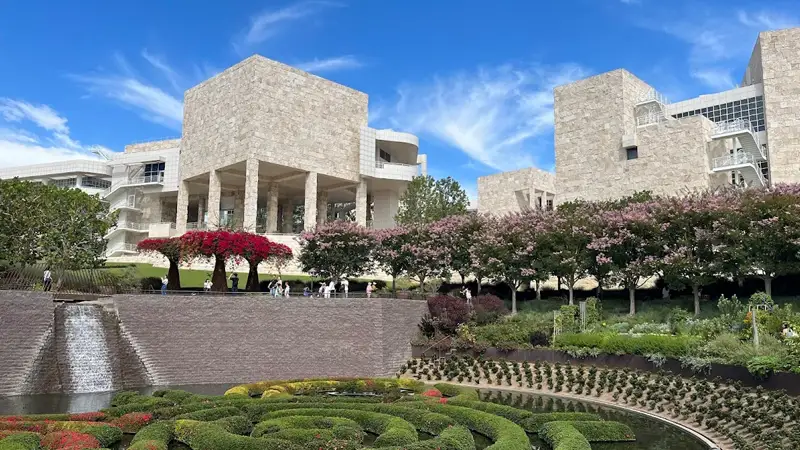
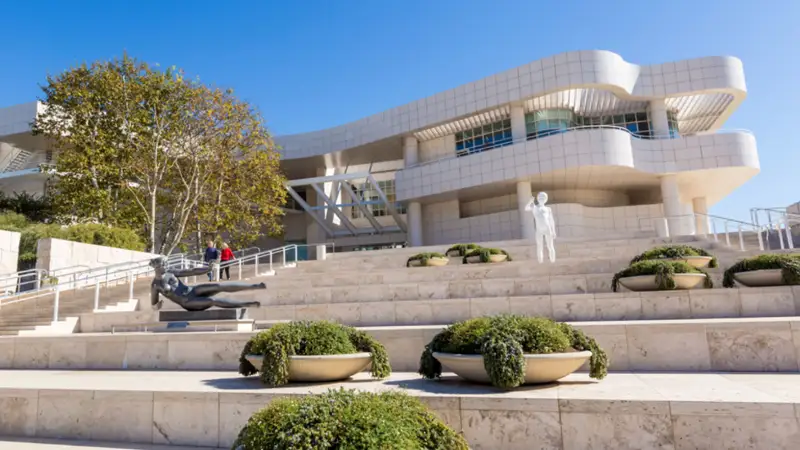
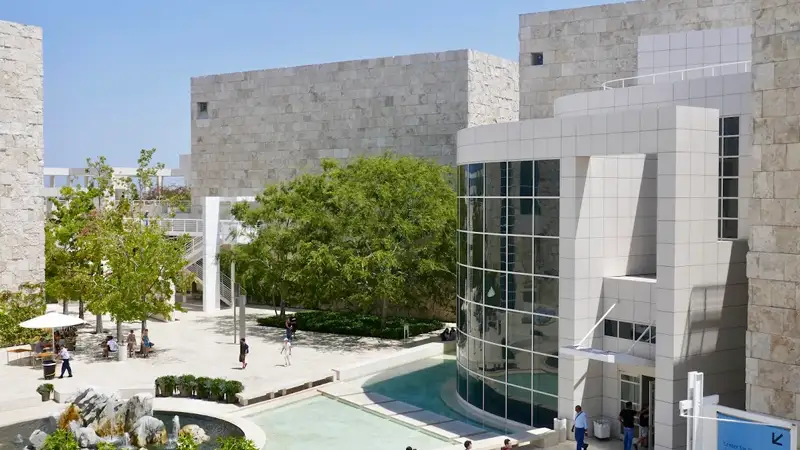
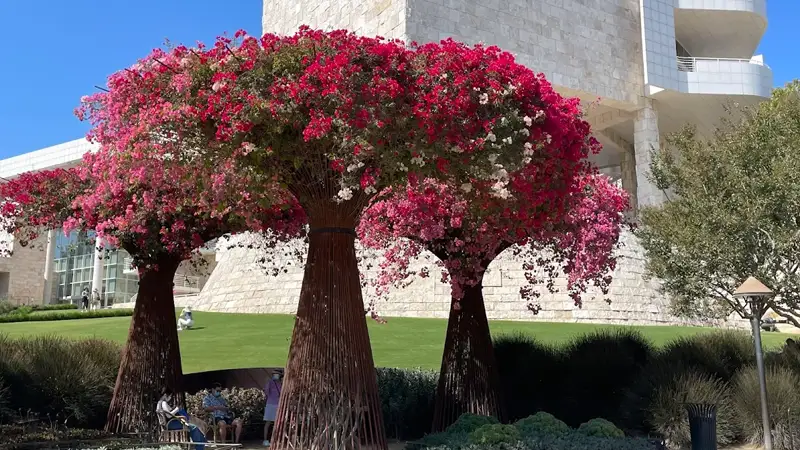
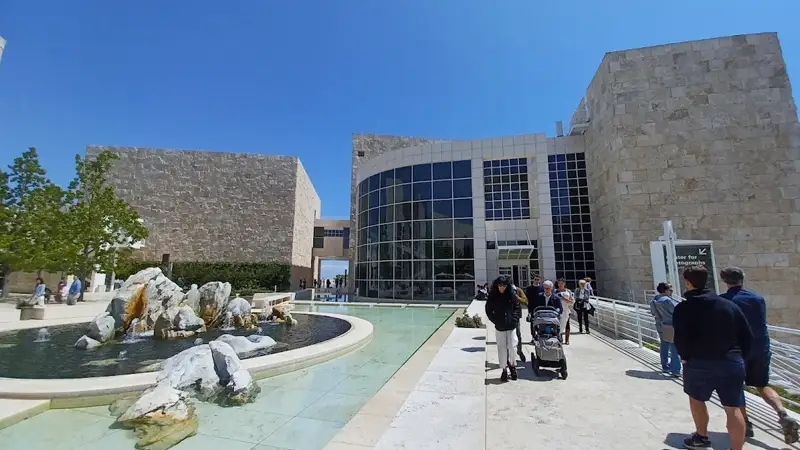
Upon arriving at The Getty, visitors are immediately immersed in an experience that transcends a typical museum visit. The journey begins with a hover-train tram ride that ascends the hill, offering sweeping views of the Sepulveda Pass before depositing guests at the arrival plaza. Designed by architect Richard Meier, the campus itself is a modern marvel constructed from Italian travertine stone. The stark white geometric structures contrast beautifully with the bright blue California sky, making it a paradise for photographers and architecture enthusiasts alike.
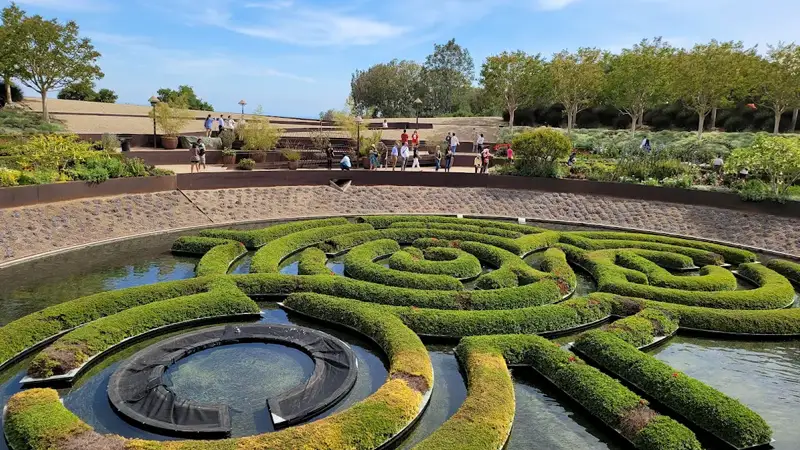
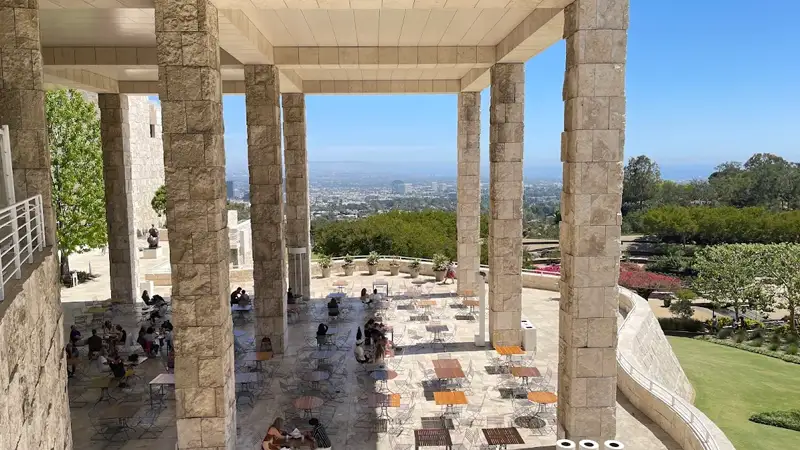
The outdoor spaces are just as significant as the indoor galleries. The Central Garden, designed by artist Robert Irwin, is a “living sculpture” that evolves with the seasons. A zigzagging path takes you down to a central pool containing a floating maze of azaleas. Dotted around the grounds are impressive modern sculptures and manicured lawns where visitors often relax. The panoramic views from the terraces are unmatched, allowing you to see everything from the Pacific Ocean to Downtown Los Angeles on a clear day.
Exploring the Collections and Amenities
Inside the pavilions, the art collection is staggering in its depth and quality. The Getty Center primarily focuses on pre-20th-century European paintings, drawings, illuminated manuscripts, sculpture, and decorative arts. Art lovers can stand inches away from masterpieces like Van Gogh’s Irises or works by Rembrandt, Turner, and Monet. The museum also boasts a robust photography collection and hosts rotating international exhibitions that ensure there is always something new to discover.
In terms of amenities, the location is well-equipped for a full-day excursion. There are multiple dining options ranging from casual cafes to the elegant Restaurant at The Getty, which offers fine dining with a view. The museum provides free Wi-Fi and an excellent audio guide app that enhances the touring experience. For families, there is a dedicated Family Room with hands-on activities to keep children engaged with the art.
Weighing the Pros and Cons for Visitors
When planning a trip to The Getty, it is important to weigh the logistical factors. The most significant advantage is that admission to the museum is entirely free. This accessibility allows visitors to return multiple times without financial burden. The educational value, combined with the pristine maintenance of the facilities, makes it a world-class destination.
However, there are some downsides to consider. While admission is free, parking is not, and the fee can be relatively high (typically around
20–25 depending on the time of day). Additionally, because it is a major tourist attraction, the galleries and the tram line can get quite crowded, especially on weekends and holidays. Finally, the sheer size of the campus can be overwhelming; it requires a significant amount of walking, which might be tiring for some visitors, though elevators and accessibility ramps are plentiful.
Frequently Asked Questions
No, admission to the museum and grounds is entirely free, though parking requires a daily fee.
Guests take a unique computer-operated tram that ascends the hill, offering scenic views of the Sepulveda Pass along the way.
The most famous works include Van Gogh’s Irises, European paintings by Rembrandt and Monet, and the architecture itself.
Yes, there are several dining options available, ranging from casual cafes to a full-service restaurant with panoramic views.
Yes, despite its large size, the campus is equipped with elevators, ramps, and the tram to assist with accessibility.
Rate us and Write a Review
- Closed Now10:00 AM - 06:30 PM
- Monday10:00 AM - 06:30 PM
- Tuesday10:00 AM - 06:30 PM
- Wednesday10:00 AM - 06:30 PM
- Thursday10:00 AM - 06:30 PM
- Friday10:00 AM - 06:30 PM
- Saturday10:00 AM - 09:00 PM
- Sunday10:00 AM - 06:30 PM
- $$$$
 Own or work here?
